


































































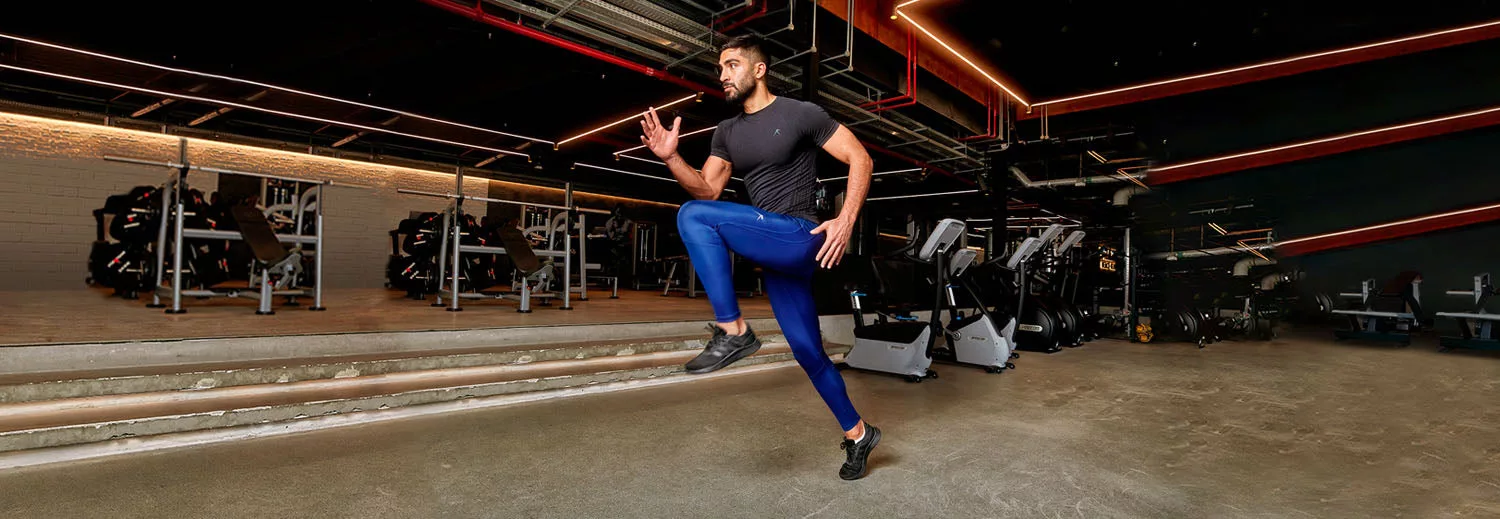
HIIT means short bursts of hard effort separated by rest. A typical session is 20 to 30 minutes, including a warm-up, with work intervals of 20 to 60 seconds. It builds fitness in less time than steady cardio because the intensity does the work rather than the duration. Two or three sessions a week is enough for most people.
What is a HIIT workout?
HIIT stands for high-intensity interval training. You work near your maximum effort for a short period, recover, and repeat.
The defining feature is the intensity, not the exercise. During a work interval you should be at roughly 80 to 95 percent of your maximum heart rate. That is hard enough that holding a conversation is impossible. If you can chat through it, you are doing intervals, but not HIIT.
The recovery matters just as much. Rest lets your heart rate drop enough that you can genuinely push again on the next interval. Skip the rest and every round gets weaker, which turns the session into moderate cardio by accident.
Almost any exercise works: sprinting, cycling, rowing, burpees, kettlebell swings, jump squats. The format is what makes it HIIT.
Why HIIT works
The main appeal is efficiency. A 20-minute HIIT session can deliver cardiovascular gains similar to a much longer steady run. For anyone short on time, that is the whole argument.
Working near maximum effort pushes your heart and lungs harder than steady work does, which improves your VO2 max, the measure of how much oxygen your body can use. It also improves insulin sensitivity and, unlike long steady cardio, it preserves muscle better when you are in a calorie deficit.
There is also an afterburn effect. Your body keeps using extra oxygen for hours afterwards as it recovers. This is real, but it is modest. It typically adds somewhere between 6 and 15 percent to the calories burned in the session, not the huge numbers sometimes claimed.
Common HIIT formats
| Format | Work | Rest | Best for |
| Tabata | 20 seconds | 10 seconds | Very short, very hard sessions |
| Classic 1:1 | 30 seconds | 30 seconds | Beginners |
| 1:2 ratio | 30 seconds | 60 seconds | Learning the format |
| Sprint intervals | 60 seconds | 90 seconds | Running and cycling |
| EMOM | Set reps | Rest of the minute | Strength-based HIIT |
Start with a 1:2 ratio, so twice as much rest as work. As your fitness improves, shorten the rest. That is a cleaner way to progress than simply adding rounds.

A 20-minute beginner HIIT workout
Warm up for five minutes first with easy movement and some dynamic stretching. Never start a HIIT session cold, since the injury risk is real.
Then do four rounds of the following, working 30 seconds and resting 30 seconds on each move:
- Squat jumps — or bodyweight squats if jumping is too much.
- Push-ups — drop to your knees when form breaks down.
- Mountain climbers — keep your hips low.
- High knees — or fast marching on the spot.
Rest 60 seconds between rounds. Finish with three to five minutes of easy walking and stretching to bring your heart rate down gradually.
That is 20 minutes in total. If you finish feeling like you could do it all again, you did not go hard enough during the work intervals.
Is 20 minutes of HIIT a day good?
Twenty minutes is a good session length. Doing it every day is not.
HIIT is demanding on your nervous system as well as your muscles. Daily sessions lead to accumulated fatigue, worse performance, poor sleep and eventually injury. The intensity that makes it effective is exactly what makes it hard to recover from.
Two or three sessions a week, with a rest day or an easy day between them, is the sweet spot for most people. Fill the other days with walking, steady cardio, mobility or strength work.
If you want to train daily, alternate. HIIT on Monday, Wednesday and Friday, with easy movement or strength work on the other days. You will get better results than doing HIIT seven days a week, and you will keep doing it.
Does HIIT burn belly fat?
HIIT helps you lose fat, and some of that fat comes from your midsection. But you cannot direct where your body takes it from. Spot reduction is not something the body does.
What actually determines fat loss is your overall energy balance over weeks and months. HIIT contributes by burning calories in a short session and by slightly raising your metabolic rate afterwards, but diet does most of the work.
There is one genuine advantage worth knowing. Research suggests high-intensity work is reasonably effective at reducing visceral fat, the deeper fat around the organs that carries the most health risk. So it does help, just not through targeting your stomach directly.
The honest summary is that HIIT is a good tool for fat loss as part of a sensible diet, and a poor one on its own.
HIIT in Gulf heat
Heat changes the maths on HIIT. Your heart rate climbs faster in high temperatures, so an effort that feels moderate in winter can push you into the red in July.
A few practical adjustments help:
- Train indoors in summer. Outdoor HIIT between May and September is genuinely risky in the middle of the day.
- Extend your rest periods. Your heart rate takes longer to come down in heat, so give it the time.
- Drink before you feel thirsty. Thirst arrives after dehydration has already started.
- Cut the session short if you feel dizzy or stop sweating. Both are warning signs, not something to push through.
If you train outdoors, go early morning or after sunset. Understanding your heart rate response helps here, and our guide to heart rate training zones explains how to read the effort properly.
What to wear for HIIT
HIIT produces more sweat in 20 minutes than an hour of steady work, so kit matters more than it does for gentler training.
Sweat-wicking fabric is the priority. Cotton absorbs sweat and turns heavy and cold, which is uncomfortable during rest intervals when your body temperature drops fast. A technical performance tee moves the sweat to the surface where it can evaporate.
Movement is the other consideration. HIIT involves jumping, dropping to the floor and changing direction quickly, so anything restrictive gets in the way. Four-way stretch shorts or leggings that stay put through burpees make a real difference.
For women, support level is not optional. HIIT is high-impact, so a high-support sports bra is the single most important piece. And decent cushioned socks matter more than people expect when you are landing repeatedly.
Mistakes that ruin a HIIT session
- Not going hard enough. If you can talk during the work interval, it is not HIIT.
- Cutting the rest short. Rest is what lets you hit the next interval properly.
- Skipping the warm-up. Going from cold to maximum effort is how people get hurt.
- Doing it every day. Recovery is when the adaptation happens.
- Letting form collapse. Fatigue is not an excuse for sloppy reps, especially with jumping movements.
- Making every session a HIIT session. You still need strength work and easy cardio.
Who should be careful with HIIT
HIIT suits most healthy adults, but it is not for everyone straight away. If you are completely new to exercise, build a base with walking and steady cardio for a few weeks first. Going from nothing to maximum effort is a fast route to injury.
Anyone with a heart condition, high blood pressure, joint problems or who is pregnant should speak to a doctor before starting. This is not a formality, since the intensity is genuinely high.
You can also scale it. Swap jumping movements for low-impact versions, use a bike or rower instead of running, and lengthen the rest periods. The format still works at lower impact.
The bottom line
HIIT is one of the most time-efficient ways to build fitness. Work hard for 20 to 60 seconds, rest properly, and repeat for around 20 minutes. Do it two or three times a week rather than daily, warm up first, and respect the rest intervals. In Gulf summer, train indoors and give yourself longer to recover between rounds. Wear something that wicks sweat and moves with you, because a 20-minute HIIT session will test both.
Frequently asked questions
What is a HIIT workout?
HIIT is high-intensity interval training: short bursts of near-maximum effort separated by rest. A work interval usually lasts 20 to 60 seconds, and a full session runs about 20 to 30 minutes. The intensity is what defines it, not the specific exercise.
Is 20 minutes of HIIT a day good?
Twenty minutes is a good session length, but doing it daily is too much. HIIT is demanding to recover from, and daily sessions cause fatigue and raise injury risk. Two or three times a week works better, with easy movement or strength work on other days.
Does HIIT burn belly fat?
HIIT helps with fat loss overall, but you cannot choose where your body takes it from. Spot reduction does not work. Research does suggest high-intensity work is useful for reducing deeper visceral fat, though diet still does most of the work.
What is the best HIIT workout for beginners?
Four rounds of squat jumps, push-ups, mountain climbers and high knees, working 30 seconds and resting 30 seconds, with a minute between rounds. Warm up for five minutes first and cool down afterwards. That is around 20 minutes in total.
How many times a week should you do HIIT?
Two or three sessions a week suits most people, with at least one rest or easy day between them. More than that usually reduces the quality of each session rather than improving your results.
Is HIIT better than steady cardio?
Neither is better overall. HIIT delivers similar cardiovascular gains in less time and preserves muscle well. Steady cardio is easier to recover from and easier to sustain for long periods. Most people do best with a mix of both.